

What Causes A Faint Positive Pregnancy Test then Negative Next
Fact Checked
When you are trying to conceive, you may have many questions. Receiving a faint positive pregnancy test result one day, and then a negative pregnancy test result the next can make the conception process much more confusing. You may also receive a negative pregnancy test and then a positive pregnancy test several hours later. Confusing, right?
This article, “What Causes A Faint Positive Pregnancy Test then Negative the Next Day”, discusses the 5 reasons why your pregnancy test results may change over night, and what is considered a positive pregnancy test result.
In this article:
- What Does A Positive Pregnancy Test Result Look Like?
- What Causes a Faint Positive Pregnancy Test?
- 5 Reasons Why A Pregnancy Test Result May Change From Positive to Negative Overnight


What Does A Positive Pregnancy Test Result Look Like?
How a positive pregnancy test result looks varies, depending on what type of pregnancy test you use. You may use a pink dye test, blue dye test or digital test- and then different tests of those types vary with how they show their pregnancy test results.
A positive pregnancy test result may look like:
- Two pink lines on a pink dye test
- Two blue lines on a blue dye test
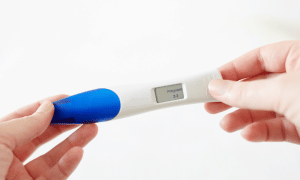
- The word “pregnant” on a digital test
- The word “yes” on a digital test
- A plus sign on a pink or blue dye test
It is important the ensure that you follow the test instructions carefully, so the test is performed and the pregnancy test results are read correctly
What Causes a Faint Positive Pregnancy Test?
A faint positive pregnancy test is a pregnancy test where the test line is barely visible. The colours of the test line may appear a lighter shade, for example a line that should be dark pink may be very light pink, and a line that should be a vivid blue may appear as a very light blue.
It is important that you ensure that the evaporation line is not mistaken for positive test results.
5 Reasons Why A Pregnancy Test Result May Change From Positive to Negative Overnight
When you are trying to conceive, it can be disappointing and discouraging when the positive pregnancy test you receive becomes a negative result overnight- but what can cause this? We discuss the 5 reasons why a positive pregnancy test result may change to a negative result. If your pregnancy test result changed in 2 hours, we have an article about that too: Positive pregnancy Test Then Negative 2 Hours Later – 4 Reasons Why
1) Evaporation Line
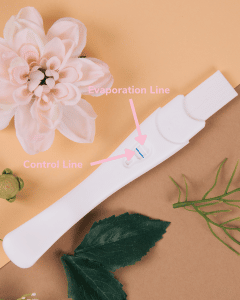
Sometimes, a test that you believed was positive, may not have been positive at all. How can this be? Well, those pesky evaporation lines can wreak havoc when interpretting your pregnancy test results!
Blue dye pregnancy tests show evaporation lines: a very faint line which shows in the place of the test line, in the case of a negative test (otherwise, in the case of a positive pregnancy test result, it will become much darker in colour). So, if you took a blue dye pregnancy test the day before, and misinterpreted the evaporation line on the pregnancy test for a faint positive result (false positive), it may explain why your result has “changed” to negative overnight!
To avoid this issue, it is recommended that you use pink dye pregnancy tests.
Why not check out our article, Do Evaporation Lines Disappear?
2) Chemical Pregnancy

According to Babatunde Gbolade, Consultant gynaecologist and fertility control specialist, if you received a faint positive result on a home pregnancy test, and then received negative results the day after, “it is possible that you had a very early miscarriage”, also known as a chemical pregnancy (or early pregnancy loss that occurs before 5 weeks of pregnancy).
Symptoms of a very early miscarriage (before 5 weeks of pregnancy) include:
- A period with heavier flow than normal
- Low hCG levels
- Lack of (your usual) pregnancy symptoms (including morning sickness, fatigue and breast tenderness)
Early miscarriages often occur due to chromosonal abnormalities. Other causes of chemical pregnancies include:
- Genetic abnormalities
- Failed implantation
- Low BMI
- Hormone imbalance
3) Time of Day

Sometimes the time of day can affect your pregnancy test results. If you take your pregnancy test in the morning- you are more likely to get a faint positive pregnancy test, as the human chorionic gonadotropin (hCG) levels tend to be higher in the morning, as your urine is more concentrated. If you took a pregnancy test in the morning and received a faint positive result, and then took a pregnancy test at night and received a negative, you should try and take a pregnancy test again in the morning
4) You Are Very Early In Your Pregnancy

If you are receiving mixed pregnancy test results, it may just be that you are too early in your pregnancy to receive accurate results.
You can take most pregnancy tests from the first day of your missed period. If you are unsure when your period is due, you should take a pregnancy test at least 3 weeks (or 21 days) after you had unprotected sex.
5) It Was A False Positive Result
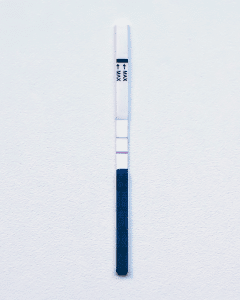
“Somestimes, a fault pregnancy test can give you a false positive test” says Access Diagnostics Tests UK Ltd, established medical suppliers founded and run by doctors.
The most often malfunction in a pregnancy test is that the control line on a pregnancy test will not show.
Pregnancy tests rarely malfunction if they are from a reputable brand, such as clear blue. Did you know that twins can cause a false negative pregnancy test?
Access Diagnostics Tests UK Ltd recommends to “check the expiration date on your test and make sure it hasn’t been tampered with or damaged” to avoid false positives.
If you are wondering if you can reuse a pregnancy test, you can read our article, Can You Reuse a Pregnancy Test?
Do you have the following combination of symptoms?: Late Period, Negative Pregnancy Test & White Discharge. Click the link to find out why!
References:
Griffey MD, MPG et al, “Hook-like Effect” Causes False-negative Point-of-care Urine Pregnancy Testing in Emergency Patients, August 2011
Clearblue, I have a faint line on my pregnancy test: am I pregnant?, February 2017
Access Diagnostic Tests UK Ltd, From Faint Hope to Disappointment: Navigating a Pregnancy Test with a Faint Line and Negative Result, April 2023
babycentre, My home pregnancy test showed a faint line. Am I pregnant?, April 2023
Griffey, Richard T., et al, “Hook-like Effect” Causes False-negative Point-of-care Urine Pregnancy Testing in Emergency Patients, August 2011

My name is Louise and I am the Digital Marketing and Administrative Assistant at MyBump2Baby. I have been writing in the parenting niche for over 2 years specialising in fertility, pregnancy, baby and baby name support articles.

Kimberly Langdon M.D. is a retired, board-certified obstetrician/gynecologist with 19-years of clinical experience. She graduated from The Ohio State University College of Medicine, earning Honors in many rotations. She then completed her OB/GYN residency program at The Ohio State University Medical Center, earning accolades for her Senior Research Project and Score of 98th percentile on a National Proficiency Test.
During clinical practice, she specialized in infertility, polycystic ovarian syndrome (PCOS), endometriosis, pelvic pain, abnormal uterine bleeding, and minimally invasive surgeries. Since leaving private practice, she founded a medical device company where she invented six patented medical devices for both life-threatening and non-life-threatening conditions. She is an expert in women’s health and medical writer; a featured author on a variety of healthcare sites.